
The Psychology of Social Media: Why It Scaled So Fast and Why We're Still Here Decades Later
Roughly five and a half billion people now use social media, somewhere around two-thirds of everyone alive, and the average user spends about two hours and twenty minutes a day across six or seven different apps. Stack all of that together and humanity pours something like fifteen billion hours into these platforms every single day, the equivalent of nearly two million years of human life burned through every twenty-four hours.
Two things about that are genuinely strange and worth explaining. The first is how fast it happened. The second, and more interesting, is that the biggest platforms are now old. Facebook launched in 2004, YouTube in 2005, the platform now called X in 2006, WhatsApp in 2009, Instagram in 2010. Novelty wears off in a year or two, yet people are still opening these apps two decades later, often dozens of times a day, often while complaining about them.
So there are really two questions here, and the honest answer to each is different. Why did social media scale faster than almost any technology in history? And why, long after the novelty should have died, are we still here? The lazy answer to both is "because it's addictive." That is part of the story, but it is the most overstated part, and leaning on it alone misses the more powerful forces at work. This piece takes both questions seriously, separates the solid psychology from the pop-science, and is honest about where the science is genuinely unsettled.
Part one: why they scaled so fast
The product that grew itself
The first thing to understand about social media's rise is that the product was its own marketing engine, in a way most products are not.
A normal company has to find each new customer and convince them one at a time. Social platforms outsourced that work to their own users. Every time you joined, the app nudged you to import your contacts, find your friends, and invite the people not yet on it. Every post, tag, and share was an advertisement beamed to people outside the platform, each one carrying an implicit message: your people are here, come join them. Growth was not something the company did to users. It was something users did to each other.
This is why the curves were so steep. A product that grows by word of mouth grows in a straight line. A product where using it recruits others grows exponentially, and exponential is what turns a dorm-room project into three billion users.
Network effects: the value is other people
Underneath that viral growth sits the single most important concept for understanding social media, and it explains both the rise and, later, why nobody leaves. It is the network effect.
The idea is simple. A telephone is useless if you are the only person who owns one, and immensely valuable when everyone does. Social platforms work the same way. The product is not really the app. The product is the other people on it. Each new user makes the platform slightly more valuable to every existing user, because there is now one more person to talk to, follow, or reach.
This creates a powerful feedback loop on the way up. More users make the platform more useful, which attracts more users, which makes it more useful still. It is the engine behind the explosive growth, and it is also, as we will see, the cage that keeps people in decades later. The same force works in both directions.
What was happening in our heads
Network mechanics explain the spread, but not why any individual found the apps so compelling in the first place. That part is psychology, and several distinct drives were at work.
The deepest is the human need to belong and to be seen. We are an intensely social species, wired over millions of years to care enormously about our standing in the group, because for most of human history, exclusion from the group meant death. Social media plugged directly into that ancient circuitry. A like, a comment, a follower, a share, each is a small, quantified hit of social approval, a number that says other people noticed you and approved. For a brain built to monitor its social standing, that feedback is not trivial. It feels like it matters, because evolutionarily, it always did.
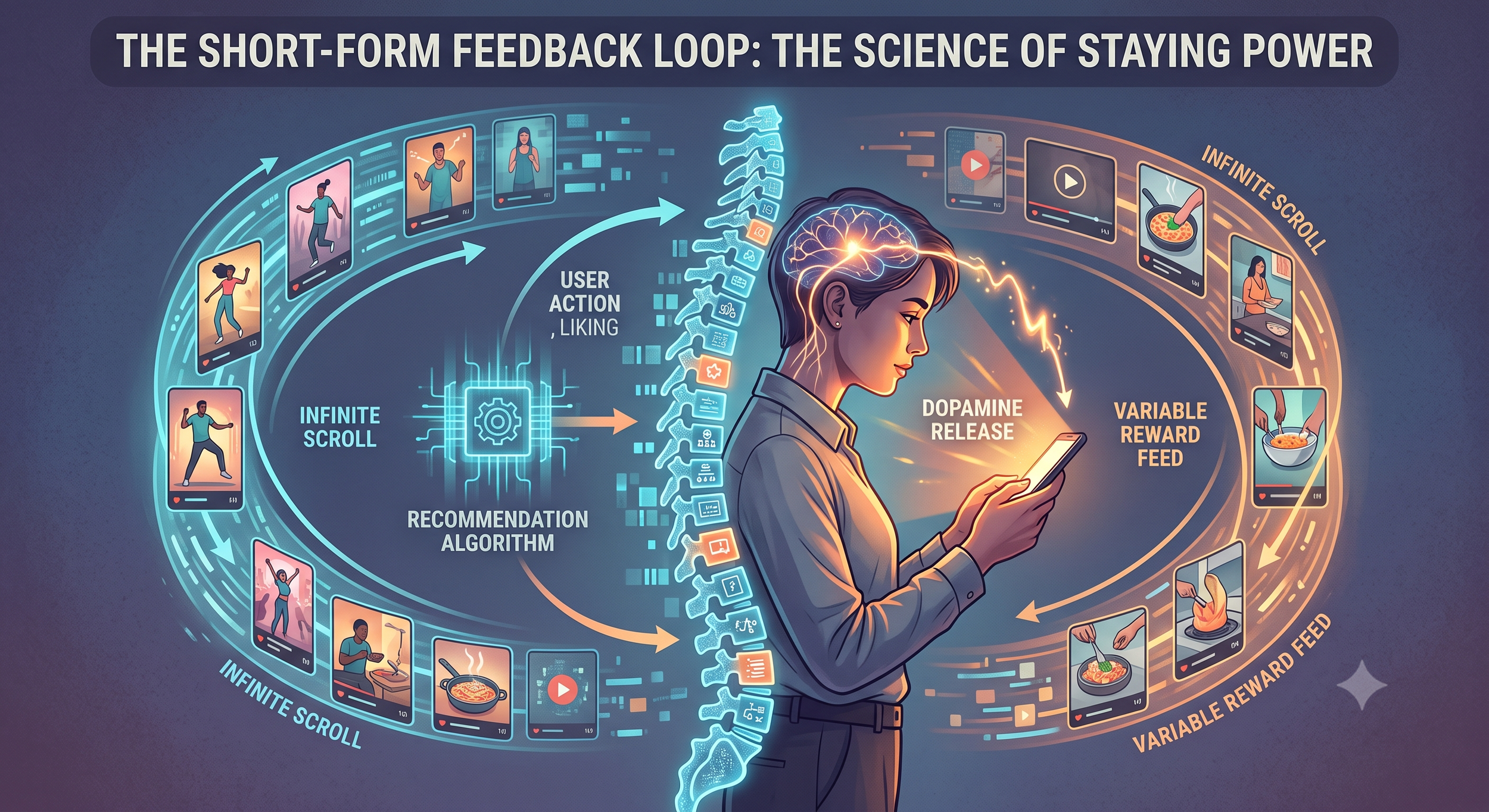
Layered on top of that is the mechanism most responsible for the compulsive checking, and the one with the strongest scientific grounding. In the 1950s, the psychologist B.F. Skinner showed that the most powerful way to drive a repeated behavior is not a predictable reward, but an unpredictable one. An animal that gets a treat every time it presses a lever presses it calmly. An animal that gets a treat on a random, unpredictable schedule presses it compulsively. This is called variable-ratio reinforcement, and it is the same principle that makes slot machines so effective.
Now think about pulling down to refresh a feed, or opening an app to check notifications. Sometimes there is something great waiting, sometimes nothing. The reward is real but unpredictable, and that unpredictability is exactly what keeps the hand reaching for the phone. Your brain releases its anticipation chemistry not when the reward arrives, but in the hope that it might. That is not a metaphor borrowed loosely from gambling. It is the same underlying mechanism.
Two more drives rounded out the appeal. There is the fear of missing out, the low-grade anxiety that something is happening, being discussed or decided, in a conversation you are not currently watching, which pulls you back to check. And there is self-presentation, the deep human urge to craft and perform an identity. A profile is not just an account. It is a curated version of the self, a stage, and posting is a way of authoring who you are in front of an audience.
The design that removed every speck of friction
Finally, the apps were engineered to make all of this effortless. Infinite scroll removed the natural stopping point a page of results used to provide. Autoplay removed the decision to watch the next thing. Push notifications created a steady stream of reasons to come back. And the algorithmic feed, personalized to each user, meant the content got more relevant the more you used it, so the variable reward paid out more often.
None of these features created the underlying psychology. What they did was strip away every small moment of friction that might have given a user a chance to stop and choose otherwise. That combination, ancient social drives plus unpredictable rewards plus frictionless design plus a product that recruited its own users, is how social media scaled faster than almost anything before it.
Part two: why we're still here decades later
Scaling fast is one achievement. Staying for twenty years is a different and arguably harder one, because the thing that powered the rise, novelty, is precisely the thing that fades. The forces that keep us here long after the new-toy feeling is gone are mostly not the same forces that got us in. This is the more interesting half of the story, and the one most explanations skip.
It stopped being a decision
The first answer is habit, in the strict behavioral sense. A habit is a behavior that has been repeated so many times it becomes automatic, triggered by a cue without any conscious decision. The cue might be boredom, a notification, standing in a queue, or simply picking up the phone for some other reason.
By the point a behavior is happening dozens or scores of times a day, with people commonly checking their phones around a hundred times daily, it has stopped being a series of choices and become a reflex. You do not decide to open the app any more than you decide to look at a clock. This is the quiet heart of social media's staying power. It does not need to win an argument for your attention every time, because it long ago stopped being an argument. It became a groove worn so deep that the behavior runs on its own.
You can't leave because everyone you know is there
The second answer is the network effect again, now working as a lock rather than an engine. The value of the platform is the other people on it, which means leaving it does not just mean giving up an app. It means giving up access to those people.
This produces a collective-action trap. You might genuinely want to quit, but your friends, your family group chat, your professional contacts, the communities you belong to, are all still there. To leave is to cut yourself off from them, and they will not all move at once to wherever you go. So everyone stays, including the people who would rather not, because the cost of being the one who left is too high. The same force that made the platform irresistible to join makes it painful to abandon. People are held not by love of the product but by the gravity of everyone else.
Years of accumulated identity you can't take with you
The third answer is the social capital you build up over time. After a decade on a platform you have followers, a posting history, an established reputation, friendships, photo archives, a handle people know you by. That accumulated identity is real value, and almost none of it is portable. You cannot export your followers or your standing to a new platform.
This creates a powerful version of the sunk-cost effect, fused with identity. Leaving does not just mean starting over technically. It means walking away from years of invested self, becoming a nobody somewhere new. The longer you stay, the more you accumulate, and the more you accumulate, the more leaving costs. Time on the platform does not just pass. It compounds into a reason to remain.
It became the infrastructure, not the entertainment
The fourth answer is that, over two decades, these apps quietly stopped being optional entertainment and became the plumbing of daily life. A large share of social time, by some estimates around sixty percent, is now spent in messaging rather than scrolling feeds, which means the apps are how people actually talk to each other. On top of that they have become where people get news, find and run businesses, date, search for jobs, organize events, and reach customers.
When a platform is how you message your family, promote your work, and follow your community, quitting it carries a real practical cost beyond the social one. You are not opting out of a diversion. You are opting out of a utility. Much of the population now depends on these tools the way they depend on email, and you do not casually walk away from infrastructure.
The platforms refused to stand still
The final answer is that the apps themselves kept changing to stay relevant. The Facebook of 2024 looked nothing like the Facebook of 2008. Platforms cannibalized their own formats, moving from text to photos to stories to short-form video as tastes shifted, often copying whatever newer competitor was rising. Short-form video now dominates attention across every major platform, and the ones that did not adapt to it lost ground.
This matters for staying power because it means the thing you got bored of is not the thing that exists today. The platform you joined kept morphing into a new platform, repeatedly refreshing the novelty that would otherwise have faded. You never quite outgrew it, because it kept becoming something else.
Is it addiction, or something else?
This is where the conversation usually collapses into a single loud claim: social media is addictive, engineered like a slot machine to hijack your brain. That claim contains real truth and real exaggeration, and a neutral account has to separate them, because the science here is genuinely contested rather than settled.
Start with what is well supported. The variable-reward mechanism described earlier is real and demonstrated. Neuroimaging studies do show that heavy, problematic social media use activates some of the same brain reward regions involved in substance use. The compulsive checking is not simply a failure of willpower, and treating it as a pure character flaw misreads the design.
Now the important caveats, which rarely make it into the headlines. Social media addiction is not a recognized clinical diagnosis. It does not appear in the main diagnostic manual that mental health professionals use, which formally recognizes only gambling among behavioral addictions. The term researchers actually debate is problematic social media use, and whether it even qualifies as a genuine behavioral addiction is an open argument, with a substantial camp of scientists warning that labeling an ordinary, near-universal behavior as an addiction risks pathologizing normal life. Estimates of how many people show genuinely problematic use range enormously, from around three percent to as high as a quarter, and that huge spread is itself a sign of how unsettled the measurement is.
The brain science is softer than it is often made to sound, too. Most of the studies are correlational, which means they cannot tell us whether the platforms change people's brains or whether people with certain tendencies are simply drawn to the platforms in the first place. And the popular dopamine story is genuinely oversimplified. Dopamine is not the pleasure chemical that the phrase "dopamine hit" implies. It is involved in motivation, anticipation, learning, and movement, and the tidy image of an app squirting pleasure juice into your brain like a drug is a pop-science shorthand, not an accurate description of the neuroscience.
The honest synthesis sits between the two extremes. For most people, social media use is best understood as a very powerful habit, reinforced by clever design and locked in by network effects and identity, rather than a clinical addiction. For a minority, use does become genuinely compulsive and harmful, crossing into territory that looks addiction-like and deserves to be taken seriously. The truth is neither "it's just harmless fun" nor "it's digital heroin." It is a spectrum, and where any given person sits on it varies.
There is also a meaningful distinction in how the time is spent. Research suggests that active use, actually connecting and communicating with people, tends to be neutral or even beneficial, while passive use, endlessly scrolling and comparing yourself to others, is the pattern more associated with harm. The same app can be a lifeline or a slow drain depending on how it is used.
The debate is not just academic. In early 2026 a California jury awarded six million dollars to a plaintiff who argued the addictive qualities of social media had harmed her, a verdict the platforms dispute and are appealing, while the head of Instagram has testified that there is a real difference between clinical addiction and problematic use. The question of whether these products are addictive in a legally and medically meaningful sense is now being fought in courtrooms, not just journals, and it is not yet resolved.
The paradox at the end
If you want one fact that captures the whole strange situation, it is this. The generation that uses social media most heavily is also the most eager to escape it. The youngest adults average more than three hours a day on these platforms, the highest of any age group, and yet nearly a third of them deleted a social app in the past year. Some platforms have lost a large share of their daily users while others have surged, and people increasingly report using these apps more while trusting and enjoying them less.
That ambivalence is the real signature of social media's staying power. It is not the contented loyalty of people who love a product. It is the reluctant persistence of people who are held in place by habit, by the people they cannot leave behind, by years of accumulated identity, and by the simple fact that these apps became the water everyone swims in. The rise was powered by genuine psychology and brilliant growth mechanics. The staying is powered by lock-in. And the most accurate answer to "why are we still here decades later" is less "because we're addicted" and more "because leaving turned out to be much harder than joining ever was."
Frequently asked questions
Why did social media grow so fast?
Mainly because the product recruited its own users and became more valuable as more people joined. Every invite, tag, and share advertised the platform to outsiders, producing exponential rather than linear growth, while network effects meant each new user made the app more useful to everyone already on it. Underneath that, the apps tapped powerful human drives for social approval and belonging, and used unpredictable rewards and frictionless design to make the behavior effortless.
What is the real psychology behind social media's pull?
The strongest mechanism is variable-ratio reinforcement, the same unpredictable-reward principle that makes slot machines compelling: you check because sometimes there is something good waiting and sometimes there is not. That sits on top of a deep human need for social validation and belonging, the fear of missing out, and the urge to craft an identity in front of an audience. Design features like infinite scroll and notifications then remove the friction that might otherwise let you stop.
Why do people still use social media decades later if the novelty wore off?
Because the forces that keep people are different from the ones that attracted them. Use becomes an automatic habit triggered without conscious choice, network effects make leaving mean abandoning the people you know, and years of followers, history, and reputation create accumulated social capital you cannot take elsewhere. On top of that, the apps became essential infrastructure for messaging, news, work, and dating, and they kept changing formats to stay relevant.
Is social media actually addictive?
It depends on what you mean. The compulsive-checking mechanism is real and well supported, and heavy problematic use lights up some of the same brain reward regions as substance use. But social media addiction is not a recognized clinical diagnosis, the term experts debate is problematic social media use, and many researchers warn against pathologizing a near-universal everyday behavior. For most people it is a strong habit reinforced by design and lock-in; for a minority it becomes genuinely compulsive and harmful.
Is the dopamine explanation of social media accurate?
Only loosely. It is true that anticipation of unpredictable rewards involves dopamine, but the popular image of apps flooding your brain with a pleasure chemical is oversimplified. Dopamine is involved in motivation, anticipation, and learning, not just pleasure, and most of the brain research is correlational, meaning it cannot prove the apps are rewiring users rather than simply attracting people who were already inclined that way.
Why is it so hard to quit social media even when you want to?
Largely because of network lock-in and accumulated investment. Your friends, family, and contacts are on the platform, so leaving cuts you off from them, and they will not all move at once. You also lose years of followers, history, and identity that cannot be transferred elsewhere, and you give up a tool many people now depend on for communication, work, and news. Habit makes the behavior automatic, and all of these costs combine to make staying easier than leaving.